
Language is not merely a medium of communication but a vital clinical tool in the diagnosis, treatment, psychotherapy, and rehabilitation of people with mental health conditions.
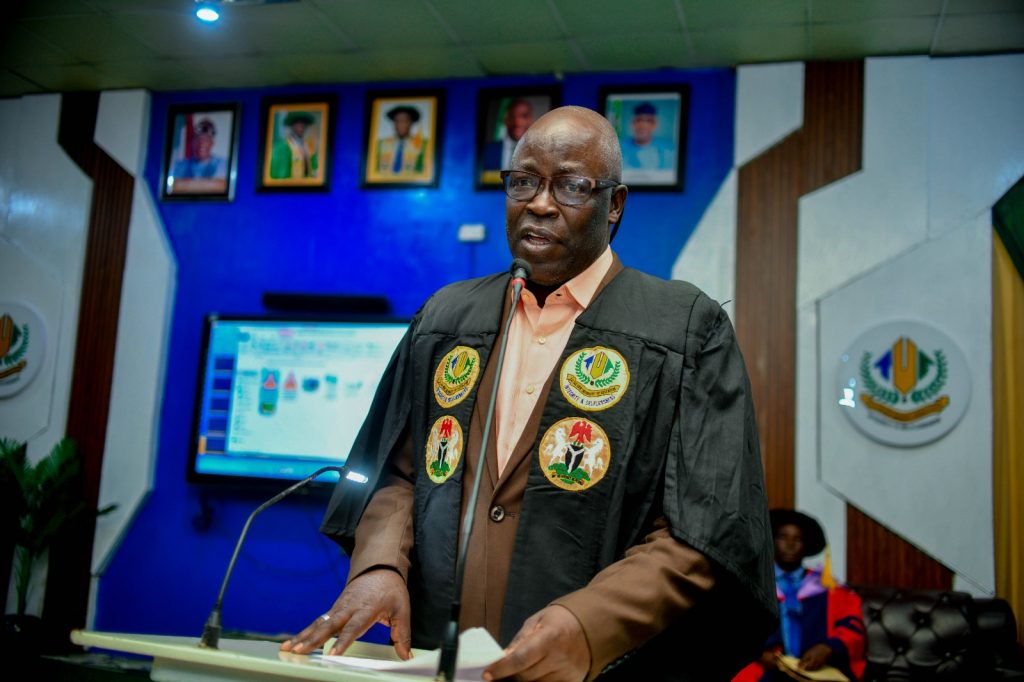
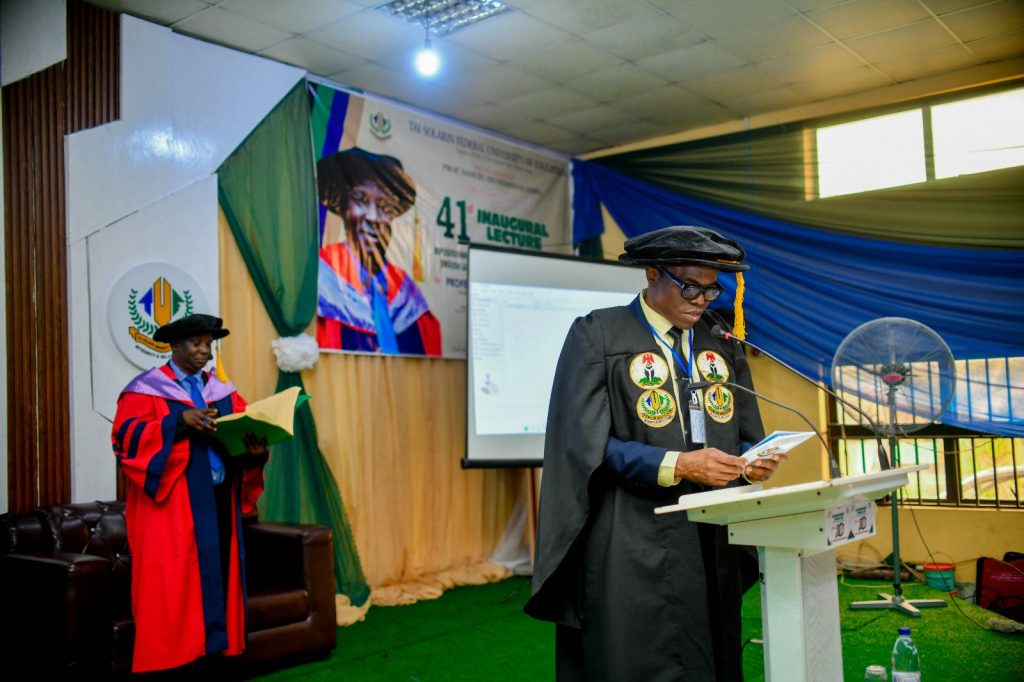
A Professor of English Language and General Linguistics, Prof Joseph. O.Akinbode made this assertion while delivering the 41st Inaugural Lecture of Tai Solarin Federal University of Education (TASFUED), where he demonstrated the indispensable role of language in psychiatry and called for stronger interdisciplinary collaboration between linguists and mental health professionals.
Speaking on the theme, “Repositioning Language Studies for Varieties of Functions: English Language and Linguistics for Special Purposes,” Prof. Akinbode explained that effective communication enables psychiatrists to better understand patients’ thoughts, emotions, and behavioural patterns, thereby enhancing diagnosis and therapeutic interventions. He stressed that attentive listening, discourse analysis, pragmatics, psycholinguistics, and neurolinguistics are essential tools for effective psychiatric practice.
Drawing from findings of his study involving people receiving neuropsychiatric care, the inaugural lecturer observed that language patterns provide valuable insights into an individual’s cognitive and mental state. He therefore advocated sustained collaboration between linguists, psychiatrists, psychologists, and other mental health professionals to improve clinical assessment, psychotherapy, and rehabilitation services.
Prof. Akinbode noted that language permeates every aspect of human existence and remains indispensable to education, governance, law, commerce, science, culture, media, and interpersonal relationships. He described language as humanity’s greatest endowment and the foundation upon which knowledge, civilisation, and social interaction are built.
The inaugural lecture explored four major areas in which English Language and Linguistics serve specialised societal functions—music, advertising, the judiciary, and psychiatry. Through these, the scholar demonstrated how linguistic principles can be applied to solve real-life challenges and advance national development.
On language and music, Prof. Akinbode analysed Yoruba Apala music, illustrating how discourse analysis and pragmatics reveal cultural values, social messages, and communicative intentions embedded in indigenous musical expressions. He noted that such studies contribute to the preservation of African cultural heritage while enriching language scholarship.
The professor also examined the language of advertising, highlighting the strategic deployment of linguistic choices, cultural symbols, and sociolinguistic realities in billboard advertisements to influence consumer behaviour. He argued that understanding these communicative strategies equips students with practical skills for careers in advertising, public relations, and the media.
In his discourse on Legal English, Prof. Akinbode advocated the simplification of legal language to make laws and judicial processes more accessible to the public. He observed that excessive technical expressions, archaic vocabulary, and complex sentence structures often impede comprehension and should be minimised to promote justice and effective communication.
Throughout the lecture, Prof. Akinbode maintained that English Language and Linguistics should be repositioned beyond traditional classroom instruction to address contemporary societal needs. He urged Universities to strengthen the teaching of specialised language courses that prepare graduates for careers in healthcare, law, advertising, journalism, media, business communication, and other emerging fields.
He concluded that the future relevance of language studies lies in their practical application to solving human problems and fostering interdisciplinary collaboration capable of driving national transformation.
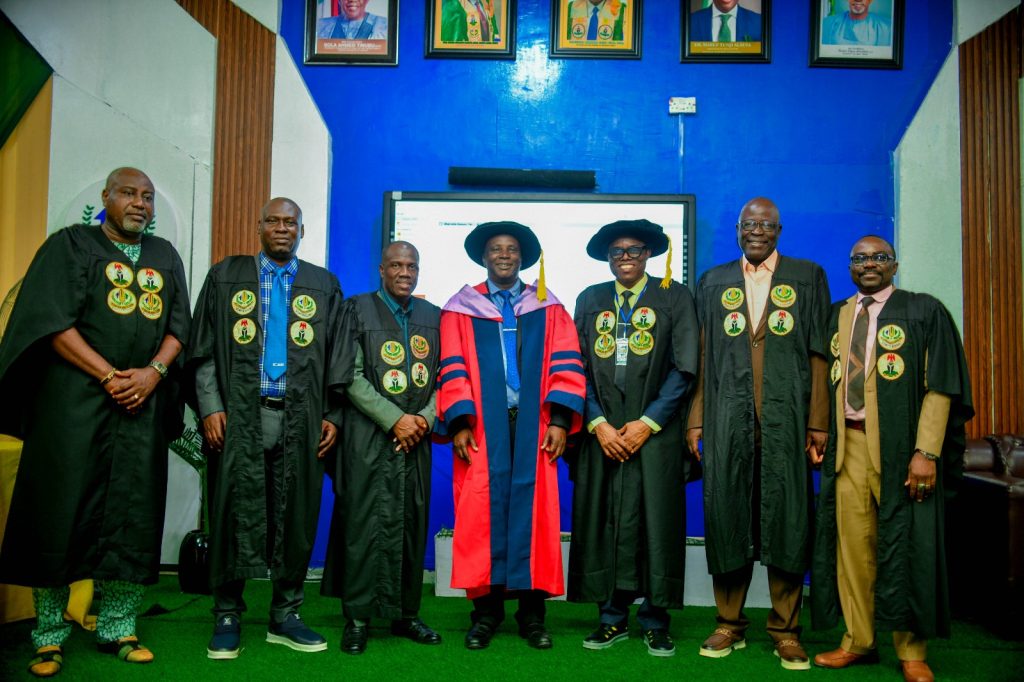
The Inaugural lecture had in attendance, the Management of the University, members of Ayinla Omowura fans club, officials from Federal Nuero- Psychiatry Hospital, Aro, Abeokuta; members of Professional Associations family and friends.